

Product Data: #202
Effective October 2013
Technical Data Sheets | FLUID FILM GEL BW (white) &
GEL BN (natural)
Permanently soft gel coating for all metals. Will not evaporate. Lanolin-based coating. Solvent free. Non-toxic.
Anti-corrosive coating for all metals. Protects against attack by moisture, salt solutions and atmospheres in marine, agriculture and industrial environments.
Applications are made in a single coat to ballast tanks, void spaces, pontoons, etc., on both new and old constructions. For use on equipment requiring protection from corrosion for extended periods.
Not recommended for extended exposure to bright sunlight. For these applications use FLUID FILM GEL BEW (Exterior). See Technical Bulletin #202.3.
If conditions dictate a heavier or lighter coating or lubricant, refer to other EUREKA CHEMICAL product bulletins for semi-liquids, gels and greases or consult EUREKA CHEMICAL COMPANY.
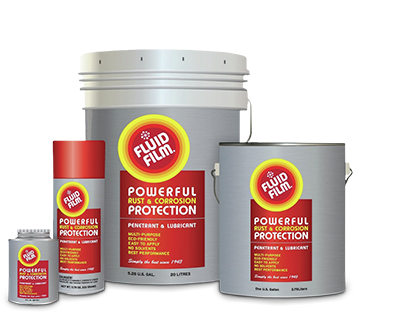
Application for Heavy Marine
Surface Preparation
New Construction: No sandblasting required. Remove any loose mill scale. Welding flux residues must be removed by wire brushing followed by washing with clean water. Clean up all debris. If surface has been shop primed with inorganic zinc, do not coat until the zinc has been cured a minimum of 30 days.
In Service Equipment: No sandblasting required. Remove flaking rust and peeling paint. Break all blisters larger than 25 mm (one inch). Remove all standing water. Clean up all debris and silt. May be applied over tightly adhering rust. Residual coal tar and asphalt coatings must be removed to leave a thickness of no more than 50 microns (0.002 inches). If surface is heavily scaled, consult your Eureka representative. For further details, see Technical Bulletin #202.4.
Number of Coats
1
Typical Coverage Per Drum
170m 2 (1,833 ft 2 ) at 1.23 mm (48mils) thickness for new steel.
146m 2 (1,571ft 2 ) at 1.44 mm (56 mils) for rusty steel.
On very heavy rust, visual inspection is required for best thickness recommendation.
Thinning
Do not thin.
Curing Time
None. Equipment may be used immediately after coating.
Methods
Airless spray, roller, brush.
Heating Required
Under extreme cold conditions, storage of material in a warm room will facilitate application.
Spray Equipment
Alemite 7896 pump (22/1 ratio) or equal, and a flow gun. See Technical Bulletin #202.1.
Clean Up
Scrape off excess then wash with hot water and mild detergent or any commercial degreaser.
Protective Equipment
When spraying use approved eye protection to safeguard against potential eye contact. Use respirator or gas mask with appropriate cartridges and canisters (NIOSH approved, if available) to remove oil mist. If making repairs by brush, a respirator is not required.
Typical Properties
Specific Gravity
0.915 - 0.925
Color (ASTM-D1535)
White: 2.5YO / 2 or lighter.
Flash Point ASTM-D92 Cleveland Open Cup
207°C (405°F)
Unworked Penetration ASTM-D217
200-230 (70°F)
Specific Conductivity
Less than 10-9 mho/cm @ 1K Hz
VOC CARB 310
1.71%
Effect on Rubber ASTM D-471 @ ± 158°F 70 hours
None on neoprene and buna-n. May cause swelling on non oil-resistant rubber goods.
Effect on Paint
None on most painted surfaces.
Effect on Aluminum
No pitting.
Effect on Copper, Brass
No staining.
Effect on Steel
No hydrogen embrittlement.
Dropping Point (ASTM-D566)
96°C (205°F). This value is given for information purposes only and is not to be construed as a recommendation for maximum temperature use.
Toxicity (Tests peformed by outside laboratory using standard methods)
Oral: LD 50 greater than 16ml / kilogram (relatively harmless).
Skin Irritation: Score 0.83 (minimal irritation). Title 16 CFR Section 1500.41.
Eye Irritation: Negative. Title 16 CFR Section 1500.42.
Performance
Salt Fog (Inches/Year):
a. ASTM-D117 (5000 hours) 0.00016
b. MIL-C-23050 0.00020
(maximum allowed 0.005)
Simulated Ballast Tank:
MIL-C-23050 0.00053
(maximum allowed 0.005)
Note 1: When welding in tanks coated with FLUID FILM, wipe material back a distance of 1.5 meters (5 feet) from where hot work is to be performed and from the deck area beneath the hot work. See Technical Bulletin #202.2.
Note 2: If FLUID FILM is applied over metal covered with scale, even though tightly adhering, anodes must not be present. If the anodes are not to be removed, then the surface must be cleaned to conform to Steel Structures Painting Council SSPC-SP3.
Note 3: Maximum usable temperature is 65°C (150°F). Ballast tanks should be filled with water 4 to 5 days before hot cargo taken on in those cargo tanks that are adjacent to ballast tanks.
All components of FLUID FILM® GEL BW & BN are listed on the TSCA Inventory.
KEEP OUT OF REACH OF CHILDREN.
This document is subject to revision without notice.